Queer Places:
69 Rue de Courcelles, 75008 Paris, France
13 Cheyne Walk, Chelsea, London SW3 5RA, United Kingdom
Brompton Cemetery, Fulham Rd., London SW10 9UG, United Kingdom
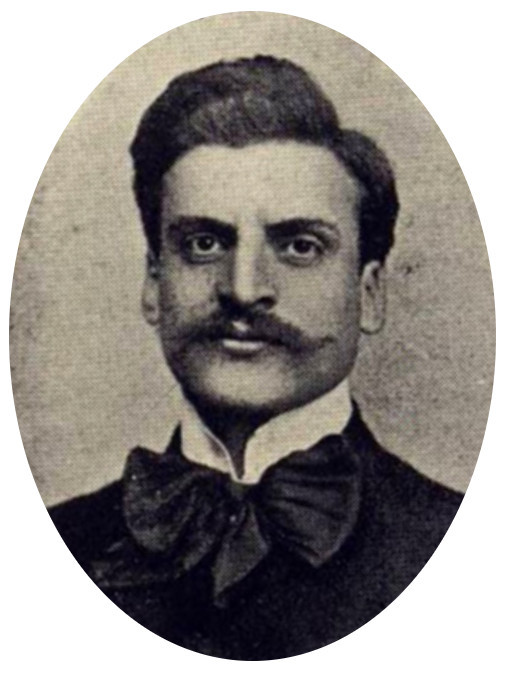 Prince Emmanuel Bibesco (Romanian: Emanuel Bibescu, August 25, 1874 - August 22, 1917) was born on August 25, 1874, in France, as the eldest son of
Prince Alexandre Bibesco and Princess Hélène Kostaki-Epoureanu. Raised in Paris at 69 Rue de Courcelles, he grew up immersed in French and European high
society, shaped by his mother's renowned artistic salon. Through this refined cultural environment, Emmanuel developed a lifelong passion for
architecture, literature, and the visual arts, becoming an influential patron and connoisseur alongside his younger brother, Prince
Antoine Bibesco.
Prince Emmanuel Bibesco (Romanian: Emanuel Bibescu, August 25, 1874 - August 22, 1917) was born on August 25, 1874, in France, as the eldest son of
Prince Alexandre Bibesco and Princess Hélène Kostaki-Epoureanu. Raised in Paris at 69 Rue de Courcelles, he grew up immersed in French and European high
society, shaped by his mother's renowned artistic salon. Through this refined cultural environment, Emmanuel developed a lifelong passion for
architecture, literature, and the visual arts, becoming an influential patron and connoisseur alongside his younger brother, Prince
Antoine Bibesco.
While Emmanuel spent much of his life navigating the intellectual and aristocratic circles of Belle Époque Paris, he also maintained ties to his
family's native Romania. In 1903, he served briefly as a Liberal deputy in the Romanian Parliament, managing political responsibilities alongside the
administration of the vast Bibesco family estates in Oltenia. Despite these civic duties, his true devotion remained centered on cultural preservation,
art collecting, and encouraging contemporary writers and artists across Europe.
Emmanuel Bibesco holds a significant place in LGBTQ+ history through his intimate involvement in the queer intellectual networks of fin-de-siècle
Paris, most notably his close bond with Marcel Proust. Experiencing same-sex attraction in an era of strict
social prohibition, Emmanuel navigated a secret, coded world alongside Proust, composer Reynaldo Hahn, writer
Lucien Daudet, and aristocratic peers like Léon Radziwill and
Bertrand de Salignac-Fénelon. Within this inner circle, Emmanuel and Proust utilized complex
anagrams, pseudonyms, and covert language—referring to themselves and their friends by private names to protect their intimacies and safely discuss
homoerotic literature, confidential romantic liaisons, and shared subcultural gossip. Emmanuel served as one of Proust's key guides to medieval Gothic
architecture, accompanying the author on extensive tours of French cathedrals that directly informed the aesthetic philosophy of À la recherche du temps
perdu. When Antoine Bibesco published Lettres de Marcel Proust à Bibesco in 1949, large portions of Emmanuel's sensitive epistolar correspondence were
intentionally withheld or redacted to obscure these explicit queer complicities.
As World War I devastated Europe, Emmanuel suffered from severe, recurring bouts of debilitating depression, exacerbated by the catastrophic wartime
destruction and personal isolation. On August 22, 1917, at the age of 42, Emmanuel Bibesco died by suicide at his brother Antoine's residence near the
River Thames and Battersea Bridge in London. He was laid to rest in Brompton Cemetery in West Brompton, London, where his grave remains marked by a
private ledger stone. His tragic death profoundly affected Marcel Proust, who mourned Emmanuel as one of his most irreplaceable friends and artistic
companions, while Antoine Bibesco carried the memory of his brother as an unclosable wound for the rest of his life.
References:
- Proust, Marcel. Correspondance de Marcel Proust. 21 volumes. Edited by Philip Kolb. Paris: Plon, 1970–1993. (Contains numerous letters written between Proust, Emmanuel Bibesco, and Antoine Bibesco detailing cathedral visits, literary discussions, wartime news, and private coded exchanges).
- Bibesco, Antoine, ed. Lettres de Marcel Proust à Bibesco. Paris: Lausanne, Clairefontaine, 1949. (Collection of letters sent by Proust to both Emmanuel and Antoine Bibesco, though selective portions of Emmanuel's correspondence were omitted in publication).
- Morand, Paul. Le Visiteur du soir: Marcel Proust. Genève: La Palatine, 1949. (Recounts Morand's observations of the Bibesco brothers and their position within Proust's social and intellectual circle during World War I).
- The Kolb-Proust Archive for Research (University of Illinois at Urbana-Champaign). (Holds original manuscript correspondence, index cards, and digital transcripts of Proust’s letters to Emmanuel Bibesco).
- Brompton Cemetery Registers & Deceased Online Archives (Royal Borough of Kensington and Chelsea, London). (Official burial register documenting Emmanuel Bibesco's death on August 22, 1917, and burial in West Brompton).
- Bibliothèque Nationale de France (BnF) – Département des Manuscrits. (Preserves letters, salon accounts, and archival documents related to Princess Hélène Bibesco and her sons).
- Tadié, Jean-Yves. Marcel Proust: A Life. Translated by Euan Cameron. New York: Viking, 2000. (Examines Emmanuel's deep influence on Proust, his guidance on Gothic architecture, and his role alongside Bertrand de Salignac-Fénelon).
- Painter, George D. Marcel Proust: A Biography. London: Chatto & Windus, 1959–1965. (Chronicles the friendship between Proust and Emmanuel, their shared artistic interests, and the impact of Emmanuel's 1917 suicide on Proust).
- Fraisse, Luc. "Proust lecteur de Henry Bidou." Bulletin d’informations proustiennes, no. 45 (2015): 91–110. (Analyzes Proust's wartime discussions with the Bibesco brothers regarding military strategy and press coverage).
- Carter, William C. Marcel Proust: A Life. New Haven: Yale University Press, 2000. (Details Emmanuel Bibesco's excursions with Proust to Rouen and Amiens, and his place within Belle Époque queer artistic circles).
Support this project
This website is a passion project researched, developed, and funded entirely by me. If you find the content valuable and would like to help support the ongoing research and hosting costs, any contribution is deeply appreciated.
Thank you for keeping this independent resource alive!
My books on Amazon: Elisa Rolle's books
BACK TO HOME PAGE